EQUINE WELFARE NETWORK PROFILE
Pegasus Therapeutic Riding, Inc.
Pegasus Therapeutic Riding, Inc.
310 Peach Lake Rd
BREWSTER, NY 10509
Founded: 1975
Profile Last Updated September 30, 2026
310 Peach Lake Rd
BREWSTER, NY 10509
Mailing Address:
310 Peach Lake Rd
BREWSTER, NY 10509
Phone: 845-669-8235
MAKE AN INQUIRY
View our WEBSITE
EIN: 06-0932894Founded: 1975
Profile Last Updated September 30, 2026
Public Charity
MISSION & PROGRAMS
Mission:Pegasus Therapeutic Riding's mission is to enhance the lives of individuals who have disabilities and challenges through equine-assisted activities and education.
Our organization conducts Equine Assisted Services in accordance with the EQUUS Foundation Guidelines on Qualifications of Organizations Conducting Equine Assisted Services (EAS).
Our organization provides outreach and/or public education programs involving horses.
100% of our total programs and services are equine-related.
The programs our organization conducts involve the direct use, care, and/or shelter of equines to fulfill our mission.
Our organization DOES NOT CURRENTLY use satellite, support, overflow, foster, and/or outreach facilities.
EQUINE WELFARE OVERVIEW: Please describe what steps your organization takes to ensure that:
1) all interactions between your equines and people are mutually beneficial and conducted in accordance with the Guidelines for Human-Equine Interactions stated below;
2) all equines in the care of our organization and/or equines that participate in the organization's program have access to clean drinking water at all times; nutritious food in sufficient quantity, including natural forage such as pasture grass and/or hay; appropriate veterinary, farrier, and dental care; shelter and protection from the weather; sufficient safe space to move around comfortably on a daily basis; and daily opportunity to freely interact and have contact with other equines:
1) Pegasus places the welfare, comfort, and dignity of every equine at the center of its programs. Equines are selected for participation based on their temperament, health, training, individual needs, and suitability for the specific activity. Our trained Equine Caregivers, instructors/facilitators, and volunteer horse handlers continuously observe each equine for signs of stress, discomfort, or changes in well-being and have the authority to modify or end participation at any time. Activities are designed to be safe and respectful, to avoid causing distress or requiring unnatural behavior, and to provide appropriate opportunities for an equine to opt out. If an equine shows signs of stress, discomfort, or unwillingness to participate, we respect that communication and modify or discontinue the activity or select another equine. Our equines are highly valued and treated as sentient partners in all program activities. The maximum workday for an equine is a total of five hours, consisting of working sessions no longer than three continuous hours. Equine workload is considered when scheduling programs and is recorded at Pegasus Farm on the program master schedule in conjunction with the horse usage notebook.
When considering potential therapeutic equines, Pegasus considers the horse’s age, soundness, temperament, height, conformation, and dynamics within the current herd. We consider the following criteria as ideal for a prospective equine candidate, but exceptions may be made at the discretion of the Herd Committee. During the on-site evaluation, the team observes grooming and tacking behavior, body condition, conformation, temperament, and movement. The horse is observed under saddle at the walk, trot, and canter, then evaluated by a Pegasus team member for riding suitability, leading and side-walking, and response to basic program props.
In our mounted programs, equines are carefully matched with participants based on factors such as the equine’s temperament, movement, size, health, workload, carrying capacity, and suitability for the participant and activity. Instructors and horse handlers continuously monitor the equine throughout each session for signs of stress, discomfort, fatigue, or unwillingness to participate. Sessions may be modified or ended at any time based on the equine’s response, and equines are given appropriate rest and are not asked to participate beyond their individual physical or emotional capacity.
Our unmounted programs may include quiet interaction, grooming, and simple leading activities that encourage respectful engagement with the equine. Leading activities focus on participants using their energy, body language, and intention without force, emphasizing collaboration. Participants are taught to recognize and understand equine body language and communication and to respond appropriately to what the equine is communicating. Written policies and procedures address equine selection for program participation, continuous monitoring for stress and well-being, mechanisms that allow an equine to opt out, participant and equine safety, supervision, emergency and first-aid response, and alignment of human-equine interactions with our mission.
2) All equines in the care of the organization have access to clean drinking water at all times; nutritious feed and forage, including hay and/or pasture, in sufficient quantity and appropriate to their individual needs; appropriate veterinary, farrier, and dental care; shelter and protection from the weather; access to large, safe turnout pastures that provide sufficient space to move around comfortably on a daily basis; and daily opportunities to freely interact and have contact with other equines.
All equines in our care, and those participating in our programs, receive detailed daily welfare oversight by our experienced, compassionate equine caregivers. They have access to clean water; nutritious feed and forage appropriate to their individual needs; routine and as-needed veterinary, farrier, and dental care; shelter and protection from weather; and access to large turnout pastures. We also provide daily opportunities for compatible social contact and interaction with other equines. Our horses are allowed ample daily turnout, as we strongly believe that is how horses are meant to live and thrive. Most horses are turned out with their horse friends, as we understand the importance of this. If a horse cannot be turned out with other horses, they will share a fence line so they do not feel alone.
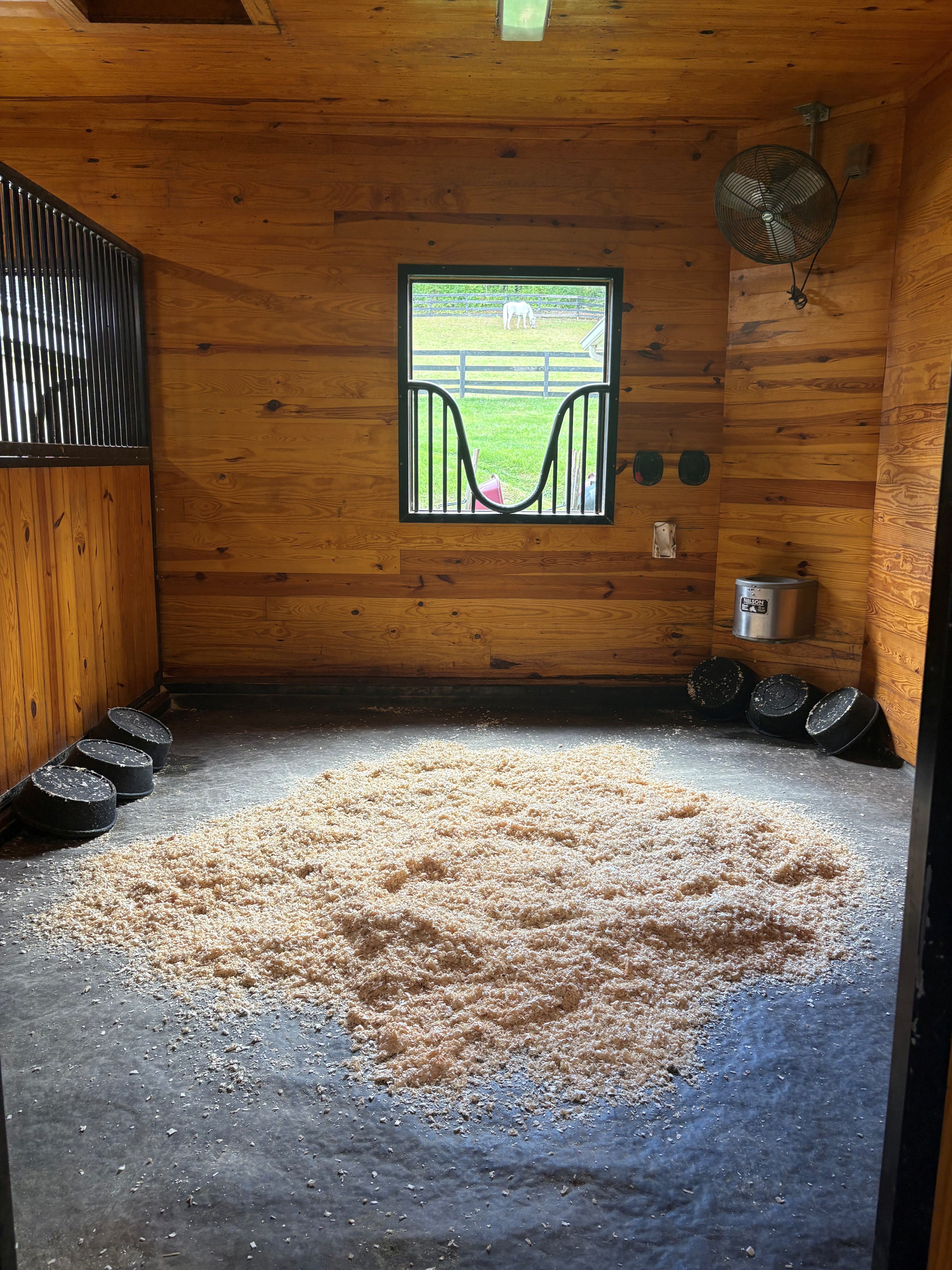
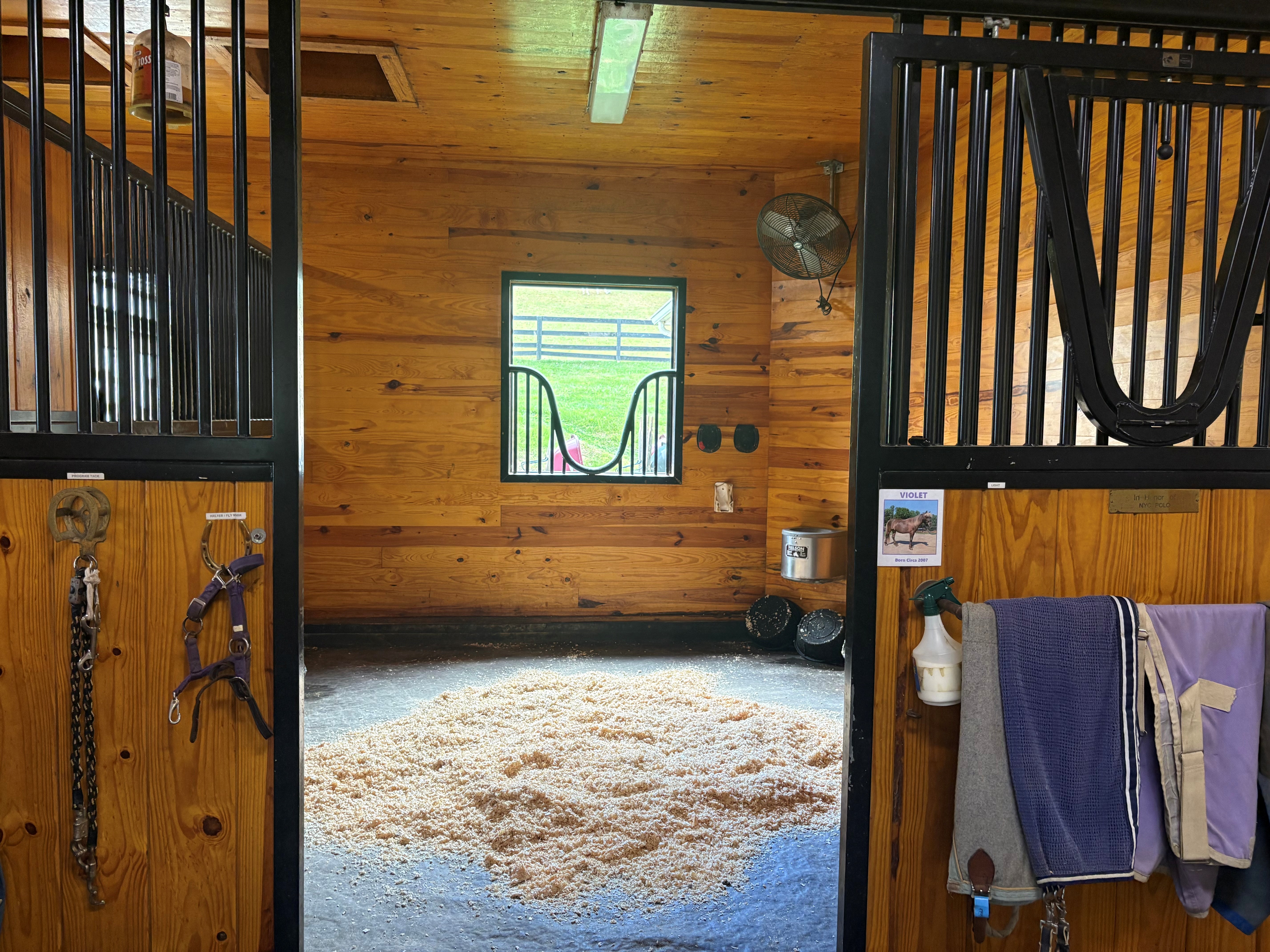
Care routines are reviewed regularly and adjusted to support each equine’s health, comfort, and quality of life. Their stalls are spacious, have therapy mats that provide comfort, and are well-bedded with quality shavings. All our stalls have a window where the horses can have fresh air and look out, as well as yokes on their stall doors that allow them to have their heads out in the barn aisle so they can socialize with people and see other horses. Each stall also has an individual fan for the warm summer months, and the horses are appropriately blanketed for their specific needs.
In addition to routine veterinary, farrier, and dental care, our horses also receive regular massage therapy as well as chiropractic care. We have automatic waterers in each turnout field as well as each stall; these are cleaned and checked daily to ensure they are in working order. We have an on-site staff member living on the property who conducts evening and nighttime checks, making sure all the horses have hay and water and are doing well.
EQUINE ASSISTED SERVICES (EAS)
The purpose of this section is to outline the Equine Assisted Services that this organization conducts, however, the EQUUS Foundation does not evaluate and is not endorsing the quality or effectiveness of this organization's Equine Assisted Services or activities involving interactions between horses and people. The EQUUS Foundation relies on this organization's assertion that:
-- this organization abides by the EQUUS Foundation Guidelines for Human-Equine Interactions;
-- this organization abides by and utilizes the definitions outlined in the EQUUS Foundation Guidelines on Qualifications of Organizations Conducting Equine Assisted Services (EAS) and contained in the documents, Optimal Terminology for Services in the United States That Incorporate Horses to Benefit People: A Consensus Document and EAS-Definitions-Guide-for-Researchers, and the YouTube presentation of the Optimal Terminology Working Group, Equine-Assisted Services Terminology Overview;
-- the organization's description of the services provided is truthful and accurate;
-- the credentials of the providers meet the certification criteria to provide Equine Assisted Services (EAS) in accordance with the EQUUS Foundation Guidelines on Qualifications of Organizations Conducting Equine Assisted Services (EAS).
This organization provides the following Equine Assisted Services (EAS):
Adaptive/Therapeutic Riding
Adaptive/Therapeutic Unmounted Horsemanship
Equine-assisted Learning in Personal Development
Providers:
8: Total number of Providers at Pegasus Farm
Equine Assisted Services (EAS) Overview:
Overview of our programs involved with providing EAS to individuals with special needs:
Pegasus Therapeutic Riding is a PATH Intl. Premier Accredited Center whose mission is to enhance the lives of people with disabilities and challenges through equine-assisted activities and education. Our PATH-certified instructors and other professionals deliver mounted and unmounted equine-assisted services to children, teens, and adults with physical, cognitive, behavioral, emotional, social challenges, as well as veterans, first responders, caregivers, trauma survivors, and other individuals who face significant life challenges. Experienced equine professionals support programs with knowledge of equine welfare, handling, and behavior.
Therapeutic Riding is a mounted equine-assisted service where the movement of the horse is used along with basic riding instruction and horsemanship skills. During lessons, participants have an opportunity to interact socially, engage in recreational and competitive activities, and work on individualized developmental goals. The movement transfer from horse to rider can help improve mobility, balance, posture, coordination, strength, concentration, communication, behavior regulation, and confidence. This program is intended for children, adolescents, and adults with physical, developmental, cognitive, emotional, behavioral, and social disabilities and challenges. Participants can have autism spectrum disorder, developmental and intellectual disabilities, neurological and neuromuscular disorders, mobility limitations, communication difficulties, sensory processing, and other diagnoses for which adaptive riding would be appropriate.
Therapeutic Horsemanship is an unmounted, experiential program based on the use of the horse-human relationship for personal development and learning transferable life skills. During the program, participants perform activities like grooming, leading, watching and interpreting horse's behavior, and having quiet time bonding with the horse. Through the program activities, participants work towards achieving their individualized goals related to trust, respect, communication, confidence, emotional regulation, problem-solving, relationship building, independence, and self-advocacy. Therapeutic Horsemanship is an unmounted program for children, adolescents, and adults with developmental, intellectual, social, emotional, and behavioral disabilities and challenges, as well as for neurodiverse participants who need an alternative to, or supplementation for, mounted programming.
Wellness and Resilience Through Challenges is an equine-assisted ground-based program aimed at supporting social-emotional wellness and personal growth. Participants get involved in facilitated experiential horsemanship activities focused on promoting self-awareness, mindfulness, communication, emotional regulation, boundary setting, confidence, and coping mechanisms development. This program helps individuals and groups of people facing challenges associated with anxiety, depression, chronic stress, grief and loss, trauma, life transitions, caregiver fatigue, disordered eating, and other factors influencing emotional wellness and resilience. Program implementation is supported by credentialed professionals, including a Licensed Clinical Social Worker (LCSW).
Pegasus Equine Assisted Resilience Program for Veterans & First Responders
Pegasus delivers highly individualized non-mounted equine-assisted resilience programming for veterans, active duty military, first responders, emergency services personnel, police, fire personnel, healthcare providers, and other individuals working in occupations associated with potential exposure to occupational stress or trauma.
Participants engage in basic horsemanship instruction while discovering the resilience-building benefits of interacting with horses. Participants explore presence, mindfulness, non-verbal communication, healthy boundaries, stress management, self-regulation, conflict of emotions, relationships, and resilience. This particular type of programing is relevant to those who deal with post-traumatic stress, secondary trauma, burnout, isolation, anger and/or stress management, or adjustment difficulties resulting from traumatic or high-stress experiences.
Equine Experience Days provide horse-oriented experiential learning opportunities for individuals with special needs. Participants get involved in direct work with horses and complementary activities which might involve gardening, interaction with nature, music and arts.
The program is designed to foster teamwork, self-esteem, confidence, empowerment, communication, socialization, and fun. Equine Experience Days can be conducted for children and adults with developmental, intellectual, physical, cognitive, social and/or emotional challenges.
Pegasus offers Leadership & Teambuilding programs with the help of equine-assisted learning for community groups, nonprofits, and corporations. Experiential programs based mostly on ground work with horses will help to enhance communication, collaboration, leadership, problem solving, self-awareness and trust among team members. Programing is individually tailored to meet particular goals and needs of the participating group. Potential participants are students, educators, corporate and nonprofit professionals, community groups and other teams in search of personal or professional development through equine-assisted experiential learning.
Outreach and/or Public Education:
Pegasus Therapeutic Riding offers various outreach and public education opportunities where community members can become familiar with horses, equine welfare, the bond between horse and human, and how horses can be beneficial to individuals.
The outreach activities provided by Pegasus include open houses, tours of the facilities, volunteer and community service projects, corporate volunteer days, among other community projects which are meant to familiarize the participants with Pegasus, our horses and our mission. These outreach activities may offer opportunities to interact with horses and learn more about the role horses play at Pegasus.
Pegasus is open to groups in the community, schools, corporations, volunteers, donors, and other community members who want to experience the farm environment and learn about equine care and safety, as well as the special bond between horse and human.
Research/Medical Use of Equines:
Our organization has never made, and would not ever consider making, equines available for research studies or medical training that involves invasive procedures and/or that which may cause pain or suffering to the equine.
Religious Affiliation:
Our organization does not promote religious education, religious purposes, or a specific religious faith or use donations for religious education or religious purposes; require participants to be of a certain faith; require participation in religious, instruction, activities or services; or require participation in prayer, worship, religious instruction or other religious activities as a condition of receiving social or secular services offered.
Auction Donation:
Our organization has never allowed, or would not consider allowing, an equine to be sold, transferred, released, or otherwise placed into possession of any person or organization that would cause or allow the equine to be sold at auction for slaughter.
POLICIES: INTAKE, ASSESSMENT & TRAINING
Prior to a horse being accepted and/or arriving at the facility, the organization has the following policies in place:The owner completes an application/contract which constitutes the agreement between the owner and our organization when the equine is acquired from the equine's owner other than by seizure or by abandonment
If health records are not available or are out-of-date, the veterinarian or a trained staff member under the direction of the veterinarian will administer appropriate vaccinations
Not Checked:
A health certificate signed by a veterinarian and dated no more than seven days prior to arrival is provided to our organization either prior to or upon arrival of the equine attesting to the health status of the equine
A health certificate signed by a veterinarian and dated no more than seven days prior to arrival is provided to our organization either prior to or upon arrival of the equine attesting to the health status of the equine
Upon intake, the organization has the following quarantine policy in place:
The equine is confined to a designated and separate area for isolation and quarantine at the facility for a prescribed period of time
Not Checked:
The equine is confined to a designated and separate area for isolation and quarantine off-site for a prescribed period of time
The equine is not quarantined
The equine is confined to a designated and separate area for isolation and quarantine off-site for a prescribed period of time
The equine is not quarantined
The typical length of quarantine is: 20 to 30 days
Following arrival of the equine at the facility, the following is performed:
A physical examination to include temperature, pulse and respiration is conducted by the veterinarian
A physical examination to include temperature, pulse and respiration is conducted by a trained staff member
A Henneke Body Conditioning Score or other body conditioning score is assigned by a veterinarian
Photographs are taken of each equine following arrival at the facility and kept with the equine's health records
An examination of hoof health is conducted by a farrier
Not Checked:
A Henneke Body Conditioning Score or other body conditioning score is assigned by a trained staff member following arrival
An examination of dental health is conducted by a dentist or veterinarian
The equine is microchipped if the organization has the authority to microchip the equine and the equine has not been microchipped
A Henneke Body Conditioning Score or other body conditioning score is assigned by a trained staff member following arrival
An examination of dental health is conducted by a dentist or veterinarian
The equine is microchipped if the organization has the authority to microchip the equine and the equine has not been microchipped
Our organization has the following policies and procedures in place pertaining to the ongoing assessment of horses in its care:
A physical examination is conducted by the veterinarian at least annually
The Henneke Body Condition score or other body conditioning score is updated at least annually by the veterinarian
Vaccinations are administered by the veterinarian at least annually, or with the veterinarian's approval, vaccinations are administered by a trained staff member at least annually
Photographs are taken of each equine annually and kept with the equine's health records
Equines at our facility may be treated by an:
Equine chiropractor
Equine acupuncturist
Equine massage therapist
Not Checked:
The Henneke Body Condition score or other body conditioning score is updated at least annually by a trained staff member
Equines at our facility may be treated by: Equine nutritionist
The Henneke Body Condition score or other body conditioning score is updated at least annually by a trained staff member
Equines at our facility may be treated by: Equine nutritionist
The organization has a procedure in place to assess equines for the following skills and behaviors:
Retrieval from a pasture/paddock
Leading with a halter and lead rope
Temperament, disposition and attitude, such as rated from very calm to very high spirited
Saddling
Bridling
Lunging
Loading onto and unloading off a trailer
Mounting and dismounting
Riding at the walk
Riding at the trot
Riding at the canter
Riding by a beginner and/or unbalanced rider
Tolerance to unusual objects and loud noises
Known vices, i.e., cribbing, biting, kicking, weaving, stall walking, etc
Grooming
Bathing
Clipping
Tolerance to multiple handlers at the same time
Not Checked:
Jumping
Driving (Pulling a carriage)
Jumping
Driving (Pulling a carriage)
Our organization has the following policies and procedures in place pertaining to the weight-carrying or workload capabilities of any horse/equine that is ridden in our care, including training:
Our organization evaluates the weight-carrying and workload limitations for each equine that is ridden at least annually and maintains a written record for each equine that is ridden that documents the results of each evaluation of the equine's weight-carrying and workload limitations
Not Checked:
Our organization does not evaluate the weight-carrying and workload limitations for each equine that is ridden
No equines are ridden; not applicable
Our organization does not evaluate the weight-carrying and workload limitations for each equine that is ridden
No equines are ridden; not applicable
The following variables are considered in determining the weight-carrying and workload limitations for each equine that is ridden:
Equine age, weight, breed, body condition, fitness, balance, health and soundness
Equine conformation to include the top line, length of back, strength and width of loin, bone density (measured by the circumference of the cannon bone just below the knee)
Size, shape, condition and angle of the hooves
Participant weight, height, body proportions, balance, fitness and riding skills as well as behavioral issues and safety concerns
Weight and proper fit of the saddle and other equipment
Terrain and footing in the working environment
Duration and frequency of working sessions, as the frequency with which an equine is subjected to maximum weight carrying and/or workload
Nature and pace of work, repetitive or varied, radius of turns, degree of incline and regularity of footing when equine is subject to maximum weight-carrying capacity
Temperature and/or weather conditions
Seasonal impact on the equines' workload and weight-carrying capabilities and limitations
Not Checked:
Our organization does not evaluate the weight-carrying and workload limitations for each equine that is ridden
No equines are ridden; not applicable
Our organization does not evaluate the weight-carrying and workload limitations for each equine that is ridden
No equines are ridden; not applicable
Horses provided formal training (groundwork or riding): 2-3 times per week
POLICIES: BREEDING
The organization has the following policies related to breeding and stallions:Our organization does not conduct breeding of equines owned or under the care of our organization.
The main facility where our organization conducts its programs does NOT breed equines.
Not Checked:
One or more of the facilities where our organization conducts its programs, including support facilities, breeds equines
One or more of the facilities where our organization conducts its programs, including support facilities, are permitted to house stallions
One or more of the facilities where our organization conducts its programs, including support facilities, breeds equines
One or more of the facilities where our organization conducts its programs, including support facilities, are permitted to house stallions
POLICIES: EUTHANASIA
The organization has the following policies related to euthanasia:Our organization will never have an equine euthanized for space
Our organization will have an equine euthanized upon the recommendation of the veterinarian if the equine is a threat to itself, other equines, or people
Our organization will have an equine euthanized upon the recommendation of the veterinarian after all reasonable treatment options have been explored
Disposal of the carcass is handled in accordance with local guidelines
Not Checked:
Our organization will never have an equine euthanized under any circumstances
Our organization will never have an equine euthanized under any circumstances
The following are authorized to administer the procedure for your organization in accordance with state laws:
Veterinarian
Not Checked:
A certified euthanasia technician
Senior staff with appropriate training
Employee of animal control shelter or humane society with appropriate training
Veterinary student under the supervision of a licensed veterinarian
Not applicable. Our organization prohibits euthanasia under any circumstances
A certified euthanasia technician
Senior staff with appropriate training
Employee of animal control shelter or humane society with appropriate training
Veterinary student under the supervision of a licensed veterinarian
Not applicable. Our organization prohibits euthanasia under any circumstances
POLICIES: RE-HOMING
View Re-homing AgreementOur organization has the following re-homing (adoption/purchase) policies and procedures in place:
All potential adopters/purchasers complete a written contract which constitutes the agreement between our organization and the new owner
Potential adopters/purchasers must visit our organization and be observed with the equine on site
The distance of a potential adopter/purchaser's home from our facility is a consideration for when re-homing an equine
Our organization conducts a site visit of the adopter/purchaser's facility before the transfer of the equine to the adopter/purchaser's facility
Not Checked:
Our organization does NOT re-home an equine to first time equine owners
Our organization will only re-home an equine to a location where another equine resides
Potential adopters/purchasers are encouraged to do a short-term, on-site foster with the equine
Adopters/purchasers are NOT required to provide updates
The organization ensures that all equines, for which they have the authority to microchip, are microchipped prior to the adoption and/or transfer of the equine.
Our organization does NOT re-home an equine to first time equine owners
Our organization will only re-home an equine to a location where another equine resides
Potential adopters/purchasers are encouraged to do a short-term, on-site foster with the equine
Adopters/purchasers are NOT required to provide updates
The organization ensures that all equines, for which they have the authority to microchip, are microchipped prior to the adoption and/or transfer of the equine.
Our organization has the following policies and procedures related to horses that need to be retired, are no longer able to contribute to the mission of the organization, and/or are no longer manageable:
Equines may remain at our organization for their lifetimes
Equines may be found suitable homes by our organization
Equines may be returned to their owners
In the case an equine is unmanageable and demonstrates repeated dangerous behaviors, the equine may be euthanized upon the recommendation of the veterinarian
In the case an equine is unsound and/or unhealthy and cannot be treated to relieve suffering, the equine may be euthanized upon the recommendation of the veterinarian
Not Checked:
Equines may be sent to auction
If a suitable home cannot be located within 12 months, the equine may be euthanized
The organization has a practice in place and the financial means to accept financial responsibility for equines in the current care of the organization should space not be available for the equine to remain at the organization and all alternatives have been explored to find the equine an appropriate placement, including those that need to be retired or are no longer able to contribute to the mission of the organization.
Equines may be sent to auction
If a suitable home cannot be located within 12 months, the equine may be euthanized
The organization has a practice in place and the financial means to accept financial responsibility for equines in the current care of the organization should space not be available for the equine to remain at the organization and all alternatives have been explored to find the equine an appropriate placement, including those that need to be retired or are no longer able to contribute to the mission of the organization.
The uploaded Re-homing agreement includes the following re-homing (adoption/purchase) statements:
The agreement reflects that any individual or organization in possession of the equine as of the date of the agreement and any time thereafter is bound to not sell the equine at auction for slaughter or allow the equine to be sold, transferred, released, or otherwise placed into possession of any person or organization that will cause or allow the equine to be sold at auction for slaughter.
The agreement states that should the adopter decide to re-home the equine, the adopter must grant the organization first right of refusal prior to the equine being placed into the possession of any individual or organization intending to take possession of the equine for any reason.
The agreement states that should the adopter decide to re-home the equine, our organization must be notified of the name, address, and telephone number of any individual or organization intending to take possession of the equine for any reason prior to the equine being placed into the possession of such individual or organization.
The agreement states that should the adopter decide to re-home the equine, our organization must grant approval of any individual or organization intending to take possession of the equine for any reason prior to the equine being placed into the possession of such individual or organization, including being provided written notification of the name, address, and telephone number of any individual or organization intending to take possession of the equine for any reason.
The agreement states that the terms of our organization's agreement will be binding on any future individual or organization taking and/or in possession of the equine for any reason.
The agreement states that re-homed equines cannot be bred
The agreement states that if there is any breach of contract the equine must be returned to our organization
The agreement states that our organization reserves the right to make scheduled visits
The agreement states that adopters/purchasers can return an equine to our organization
The agreement states that adopters/purchasers are required to provide updates (photos, vet records) for one year
The agreement states that adopters/purchasers are required to provide updates (photos, vet records) for two years
The agreement includes the microchip number of the equine.
The agreement states that adopters/purchasers are required to provide updates (photos, vet records) for as long as the adopter/purchaser is responsible for the care of the equine
Not Checked:
The agreement states that the re-homed equine CANNOT be sold, adopted, transferred, auctioned, released, given away, or otherwise placed into the possession of another individual or organization under any circumstances and must be returned to our organization should the adopter decide that he/she is no longer able, or no longer wishes, to care for the equine.
The agreement states that our organization reserves the right to make unannounced visits
None of the statements are included.
The organization does not re-home equines under any circumstances; our organization retains custody of our equines and ensures care of the equines for their lifetimes.
Our organization does not have the authority to transfer ownership and/or does not own any of the equines involved with our programs.
The agreement states that the re-homed equine CANNOT be sold, adopted, transferred, auctioned, released, given away, or otherwise placed into the possession of another individual or organization under any circumstances and must be returned to our organization should the adopter decide that he/she is no longer able, or no longer wishes, to care for the equine.
The agreement states that our organization reserves the right to make unannounced visits
None of the statements are included.
The organization does not re-home equines under any circumstances; our organization retains custody of our equines and ensures care of the equines for their lifetimes.
Our organization does not have the authority to transfer ownership and/or does not own any of the equines involved with our programs.
Our organization requires references from the following:
Veterinarian
Farrier
Personal/Other
Not Checked:
Not applicable or no references required.
Not applicable or no references required.
Transfer of ownership occurs: Immediately (at the time of adoption/purchase) or less than one year
The average equine re-homing (adoption/purchase) fee received by your organization:
None received
EQUINE CARE & SHELTER/FACILITY INFORMATION
Our organization DOES NOT CURRENTLY use satellite, support, overflow, foster, and/or outreach facilities.Total facilities at which our organization cares for and shelters horses used in our programs: 1
Pegasus Farm
310 Peach Lake Rd BREWSTER NY 10509
Currently operational
Total number of horses/equines currently involved with your programs, under your care, and/or owned by your organization at this facility: 10
Total number of horses at this facility NOT INCLUDING those counted above: 0
Maximum capacity of horses at this facility: 14
Does your organization own, lease or use a part of this facility? Own
Provide the contact information for the individual or organization responsible for investigating abuse in the county where the facility is located, including mailing address, email address, and phone information.
Putnam County SPCA P.O. Box 850 Brewster, NY 10509-0850 Phone / 24-Hour Cruelty Hotline: (845) 520-6915 Email: info@spcaputnam.org
Does your organization conduct Equine Assisted Services (EAS) at this facility in accordance with the EQUUS Foundation Guidelines on Qualifications of Organizations Conducting Equine Assisted Services (EAS)? Yes
Total number of providers AT THIS FACILITY, including instructors, specialists, therapists, counselors, coaches and/or facilitators (full-time, part-time, volunteer, independent contractors, and/or providers accompanying clients) that conduct Equine Assisted Services (EAS) in accordance with the EQUUS Foundation Guidelines on Qualifications of Organizations Conducting Equine Assisted Services (EAS) AT THIS FACILITY: 8
Providers Assigned to this Facility: (see Provider Section below for details)
1. Barry Goldblatt
2. Claudia Spinelli
3. Doreen Salerno
4. Elizabeth Fortes
5. Jenna Galasso
6. Judith Halden
7. Krista Morris
8. Suzanne Angier
Veterinarian Information: Pegasus Farm (*Main) Currently operational
Veterinarian: Dr. Bradley
Clinic Name: New England Equine Practice
2933 NY-22
Patterson NY 12563
Phone: 845-878-7500
Grounds: Pegasus Farm (*Main) Currently operational
Total acreage dedicated specifically to the horses: 17
Our organization has use of the following at this facility:
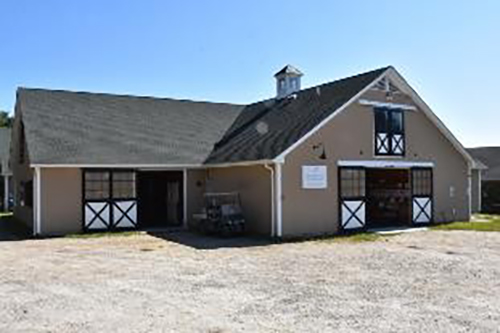
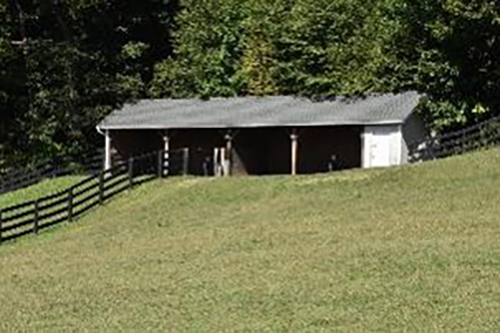
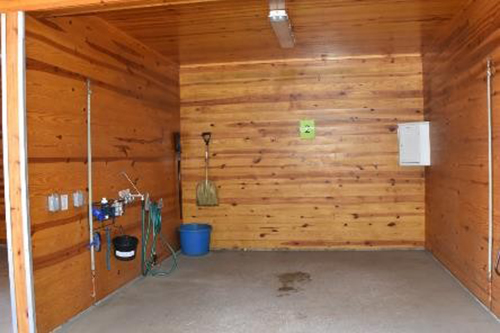
Structures/Barns: 1 Run-in sheds: 5
Pastures: 3 Paddocks/Pens/Turnout Areas: 14
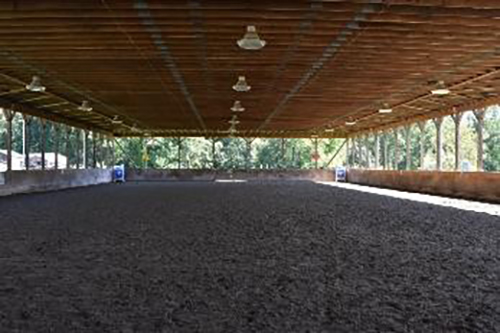
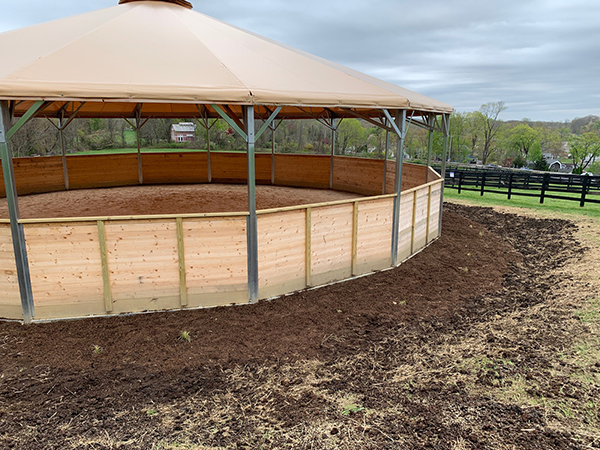
Uncovered Outdoor Rings: 0 Covered Outdoor Rings: 2 Indoor Rings: 0
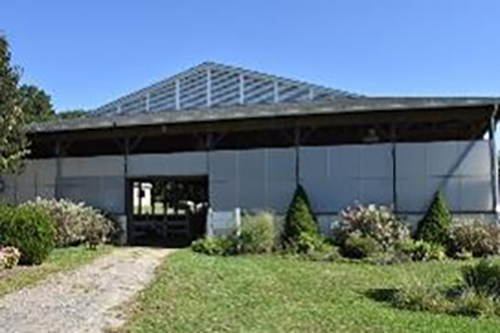
Are the organization's rules, restrictions and warnings (signage) conspicuously posted in easily accessible locations? Yes
Are the organization's emergency contacts, including veterinarian contact information, conspicuously posted in easily accessible locations? Yes
Are human and equine first aid kits easily accessible? Yes
Regarding all shelters where horses are housed including run-in sheds:
How many hours per day, on average, are horses stalled or penned where they are restricted from roaming freely? 9-12
Do horses have individually assigned stalls in the barn/structure(s) or individually assigned shelter locations where they are separated from other horses with a barrier? Yes
How often are the stalls/shelters cleaned? 6-7 Days a Week
Do all stalls/shelters allow horses to lie down, stand up and turn around and provide protection from inclement weather (wind, sleet, rain, snow and extreme temperatures)? Yes
Are stalls/shelters kept in good repair, with adequate ceiling height, and free of standing water, accumulated waste, sharp objects and debris? Yes
Are floors constructed and maintained for both good drainage and traction? Yes
Is there a ventilation and circulation system, or natural ventilation, in place to allow free flow of air to control temperature, and humidity, and to prevent air stagnation? Yes
Is wiring inaccessible to horses and maintained for safety in all areas of facility? Yes
Are fire prevention/protection measures (fire alarms, extinguishers and sprinkler systems) maintained and in good working order? Yes
Is there adequate lighting to ensure safety in all areas of facility? Yes
The following steps are taken to help staff and volunteers readily identify each horse on the property:
Equines are assigned the same exclusive stall/shelter location each day
Name plates are located on the stall/shelter location
Photos are located on the stall/shelter location
Equines wear halters with nametags
A notebook or binder with photos and information on each equine is easily accessible
A map/diagram is posted showing the location of each equine with equine names and photos
Equine photos and profiles are available on the website
Staff/volunteers are provided training on conformation, markings, colors, and breeds
Not Checked:
Staff and volunteers are provided with an information packet with equine profiles, including photos and detailed descriptions
Team leaders work with new staff/volunteers until they are able to identify the equines
Staff and volunteers are provided with an information packet with equine profiles, including photos and detailed descriptions
Team leaders work with new staff/volunteers until they are able to identify the equines
The following describes the pastures at this facility:
This facility has a written plan in place for pasture management, such as guidelines for seeding, fertilizing, irrigation, mowing, dragging, harrowing, manure removal, removal of debris, the control of poisonous plants, and a schedule for cleaning
A dedicated staff person(s) is responsible for pasture management
All pastures are fenced to prevent escape or injury
Fencing checks, such as broken or missing planks, loose fence posts, exposed or loose nails, detached wires, etc., are done regularly
Pastures are rotated
Pastures have natural protection for equines (i.e., trees)
Pastures have man-made protection for equines (i.e., shelters)
Not Checked:
This facility does not have pastures where equines can graze on pasture grass
Barbed wire is used for fencing
Electric fencing is used; electric wires or tape fence are visibly marked
This facility does not have pastures where equines can graze on pasture grass
Barbed wire is used for fencing
Electric fencing is used; electric wires or tape fence are visibly marked
The following describes the turnout areas other than pastures at this facility:
This facility has a written plan in place for the maintenance of turnout areas, which includes a schedule for cleaning, manure removal, and dragging
A dedicated staff person(s) is responsible for the maintenance of turnout areas
All turnout areas are fenced to prevent escape or injury
Turnout areas have man-made protection for equines (i.e., shelters)
Fencing checks, such as broken or missing planks, loose fence posts, exposed or loose nails, detached wires, etc., are done regularly
Not Checked:
This facility does not have turnout areas
Barbed wire is used for fencing
Electric fencing is used; electric wires or tape fence are visibly marked
This facility does not have turnout areas
Barbed wire is used for fencing
Electric fencing is used; electric wires or tape fence are visibly marked
The following policies and procedures are in place at the facility to restrict public access and to keep horses safe:
The property owner, staff member or caretaker lives on the premises and ensures that public access is restricted and is responsible for the security of the facility and equines
No Trespassing signs are posted
Authorized Personnel Only signs are posted
Visitors are only permitted at specific times
Visitors are only permitted in specific areas
The property is fitted with motion lights
The property is fitted with a security system monitored by police or a professional service
The perimeter of the property is fully fenced
Not Checked:
A security guard is present at night
By Appointment Only signs are posted.
Hold Harmless signs are posted
Entrance gates are locked at night
The property is fitted with a security system that is monitored internally by staff (or the property owner)
A security guard is present at night
By Appointment Only signs are posted.
Hold Harmless signs are posted
Entrance gates are locked at night
The property is fitted with a security system that is monitored internally by staff (or the property owner)
Equine Care/Emergency Preparedness: Pegasus Farm (*Main) 2026 and 2025 This section is required.
Horse Health Care/Barn Management Records: What system is used to collect and store health/horse care records?
Notebook or equivalent (technology not utilized)
Onsite computer with cloud-based backup storage system
Not Checked:
Onsite computer with onsite backup storage system
The following items are consistent with our feed management plan and practices: Onsite computer with onsite backup storage system
The organization takes into consideration the equine's age, breed/type, condition, size, work level and any health issues in designing each equine’s individualized feeding plan including adequate natural forage and consults with the veterinarian as needed.
The organization determines supplement plans in consultation with a veterinarian
Staff and/or volunteers are trained in proper feed measurements and protocols and observed periodically to ensure they are feeding correctly
The feed chart is centrally located and updated as needed
The area(s) where hay, feed, grain, and supplements are stored are kept clean, free of debris and chemicals, and protected from weather and other animals in rodent-proof and mold-proof containers and grain bins
Feed, supplements and hay types are clearly labeled
Water sources, i.e., buckets, troughs, automatic waterers, etc. are kept clean, free of contaminants, debris and chemicals, protected from weather and other animals, and be positioned or affixed to minimize spillage.
Medications are kept in a secure area
Not Checked:
Is clean, potable water available at all times for all equines? Yes
Hoof Care: How often is hoof care provided for each equine? Every 4-8 weeks and when an issue arises
Dental Care: How often is dental care provided for each equine? Annually and when an issue arises
Horse checks: How often are equines visually and physically checked by personnel at the facility? Every day or 6 days a week
Our organization has the following parasite and fly/insect control protocols in place, including remedies used to control flies and insects:
Our organization follows the parasite control guidelines of our veterinarian, including fecal testing and de-worming
Fly/Insect Control Remedies:
Fly parasites
Fly Traps and Tapes
Premise Sprays/Insecticides
Fly Spray Repellent
Fly Masks
Fly Sheets
Fans
Not Checked:
The following represent the biosecurity practices in place at facility:
Our organization follows the biosecurity guidelines of our veterinarian
Sick, affected and/or quarantined equines do not have contact with other equines or other animals
The organization has a written biosecurity plan
Staff and/or volunteers are trained in accordance with the General Biosecurity Guidelines of the American Association of Equine Practitioners (AAEP) and/or their veterinarian
Restricted access signs are posted at primary points of access to sick, affected and/or quarantined equines
Hand sanitizers are available at all primary points of access to sick, affected and/or quarantined equines
Manure and bedding from sick, affected and/or quarantined equines is removed from the facility - not put in open air piles or spread on pastures
Quarantine areas, such as stalls, aisle ways, and paddocks, are cleaned (and needed, disinfected) after conclusion of the quarantine.
Equipment used by sick, affected and/or quarantined equines is not shared and is cleaned of organic debris and disinfected after each use
Latex gloves, or equivalent gloves, are worn when working with sick, affected and/or quarantined equines
Not Checked:
Footbaths are available at all primary points of access to sick, affected and/or quarantined equines
Trailers/vans used by sick, affected and/or quarantined equines are cleaned and disinfected after each use and cleaning takes place away from where equines are sheltered
Equines are not quarantined on arrival.
Footbaths are available at all primary points of access to sick, affected and/or quarantined equines
Trailers/vans used by sick, affected and/or quarantined equines are cleaned and disinfected after each use and cleaning takes place away from where equines are sheltered
Equines are not quarantined on arrival.
The following represent the manure removal practices in place at facility:
Manure is stored in dumpster(s) which is a safe distance from equines and from where equines are sheltered
Manure is hauled, sold or given away
Manure piles are composted or spread on pastures
Our organization adheres to the manure management guidelines set by the state, local authorities, and/or our organization's veterinarian
Not Checked:
Manure is piled in an area which is a safe distance from equines and from where equines are sheltered
Manure piles are covered
Manure is piled in an area which is a safe distance from equines and from where equines are sheltered
Manure piles are covered
Our organization has the following policies and procedures in place pertaining to tack, apparel and equipment:
All equines have specifically assigned apparel, equipment and tack (saddles/bridles if ridden) that is not shared
Blankets, sheets and turn out apparel are fitted and utilized for each equine appropriate to the equine's needs and the weather conditions
Blankets, sheets and turn out apparel are cleaned regularly as needed
Riding Tack is always cleaned at least weekly
Riding Tack is inspected for overall working condition before each use by trained personnel
Riding Tack is assessed for fit before each use by trained personnel
Riding Tack is assessed for fit by trained personnel when an equine's body condition changes
Riding Tack is assessed for fit by trained personnel when an equine's disposition changes
This facility enlists the services of a professional saddle fitter at least once a year
Assigned riding tack is clearly labeled
Helmets are cleaned/disinfected after each use
Helmets are replaced after a fall
Helmets are replaced at least every five years.
Not Checked:
Saddles are shared
Saddle pads are shared
Bridles are shared
Bits are shared
Blankets are shared
Sheets are shared
Turnout apparel is shared
Halters are shared
Riding Tack is always cleaned after each use
Riding Tack is cleaned only when needed
Helmets are shared
No equines are ridden; saddles, bridles, etc. not applicable.
Saddles are shared
Saddle pads are shared
Bridles are shared
Bits are shared
Blankets are shared
Sheets are shared
Turnout apparel is shared
Halters are shared
Riding Tack is always cleaned after each use
Riding Tack is cleaned only when needed
Helmets are shared
No equines are ridden; saddles, bridles, etc. not applicable.
Emergency Preparedness: Pegasus Farm: *Main This section is required.
The following plans, policies, and procedures are in place at the facility to handle emergencies and address weather related issues, fire safety procedures, and/or any additional hazardous scenarios the facility could potentially experience:
The facility owns or has access to a generator
The facility maintains at least two weeks of hay, feed, shavings and medications
The facility maintains workers' compensation insurance
The organization has a written emergency preparedness/safety plan (EPP)
Not Checked:
The written EPP addresses the following areas: Medical emergencies for clients, staff, and volunteers
Medical emergencies for equines
Human and Equine Evacuation plans
Power outages
Fire
Natural Disasters - thunderstorm, hurricanes, earthquakes, tornados, etc
Active Shooter and/or Terrorist attacks
Protocols to notify emergency personnel
Building/facility exit plans
Not Checked:
Local fire department and/or the state's emergency planning department procedures
Local fire department and/or the state's emergency planning department procedures
The facility follows the specific procedures to help PREVENT emergency situations:
Smoking is strictly prohibited unless confined to designated areas.
NO SMOKING signs are posted prominently
Permanent or temporary structures where equines are stalled are kept free of trash, cleaning rags, and other flammable items
Aisles and doorways are kept clear
Heaters with automatic shutoff settings are used
Not Checked:
Hay is stored away from permanent or temporary structures where equines are stalled
Hay is stored away from permanent or temporary structures where equines are stalled
How often are the following checked or performed to ensure applicable working condition?
Fire Extinguishers are checked: Annually
Smoke detectors are checked: Annually
Fence lines are checked: Weekly
Turnout Areas are checked: Weekly
Sprinkler systems are checked: Annually
Fire drills are conducted: Semi-annually
Review of safety protocols with staff are conducted: Semi-annually
Review of safety protocols with volunteers are conducted: Quarterly
The Emergency Preparedness Plan is reviewed and updated: Annually
Functional Equine Transportation: 1= Onsite: 0 (0 + 0) + Offsite: 1
2-horse van/trailer with truck:
1 Access offsite;